
Negative Capability
And Liquid Moments....What???

I guess you could call me a wordsmith, or at best, a word collector. Actually, make that a phrase collector or a curious concept collector.
On the edge of 74, I am still hearing words and phrases that I’ve never heard before. They are popping up in articles and Substack posts as if they’ve always been around, and I’m supposed to know what they mean. Why am I, who likes to think I'm on top of everything, just hearing about negative capability and liquid moments? I had to look them up. Confusing concepts, hopefully well-explained below.
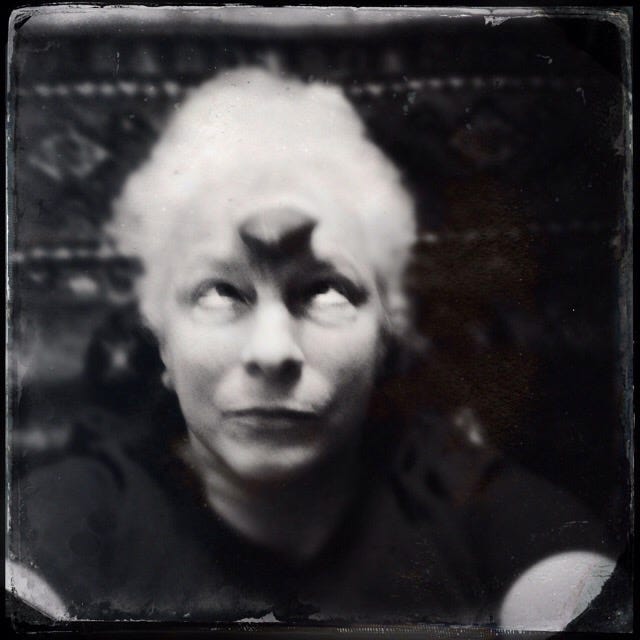
“Negative capability is the capacity of artists to pursue ideals of beauty, perfection, and sublimity even when it leads them into intellectual confusion and uncertainty, as opposed to a preference for philosophical certainty over artistic beauty.” The term, first used by [poet] John Keats in 1817, has been subsequently used by poets, philosophers, and literary theorists to describe the ability to perceive and recognize truths beyond the reach of what Keats called ‘consecutive reasoning.’ (Wikipedia)
Keats did not invent “negative capability,” he merely named it. Negative capability can be difficult to grasp, as it is not a name for a thing but rather a way of feeling or of knowing. I like to think of it in the words of one of my favorite quotes by Coleridge, “the willing suspension of disbelief.” I fully understood and used that quote decades ago in one of my first Fragment fabric collages. I guess I’ve always had negative capability.
For example: Harry Potter, Outlander, Game of Thrones - things we know not to be possible or true, but we buy into them because of the beauty of it all. Reality and the need to understand are suspended. Artists in all fields rely on our (and their) negative capability to create concepts, paintings, prose, and poetry that are more beautiful or engaging when the logic of the what and how is set aside.
As confusing as the term is, it’s having a revival in everyday language, partly because uncertainty and ambiguity are rampant in today’s world. Who and what to believe?

A liquid moment is not akin to having a drink. Usually, it means a point in time that feels fluid, unbound, and transformative — as if it could flow in any direction and reshape itself. It sounds like a drug trip to me, but it is actually grounded in reality. It also conjures up an alcohol buzz, too. Not that I'm not familiar with either of those. 😇
It’s not a predictable, fixed, typical, ordinary experience, but one that’s alive, changeable, and full of possibility. The “liquid” part suggests loosened boundaries: emotions, perceptions, or things seem to merge and shift rather than staying neatly compartmentalized. I had a liquid moment last week, while standing in amazement at the awe-inspiring wilderness majesty and history of a spot in the Connemara region, County Galway, Ireland.
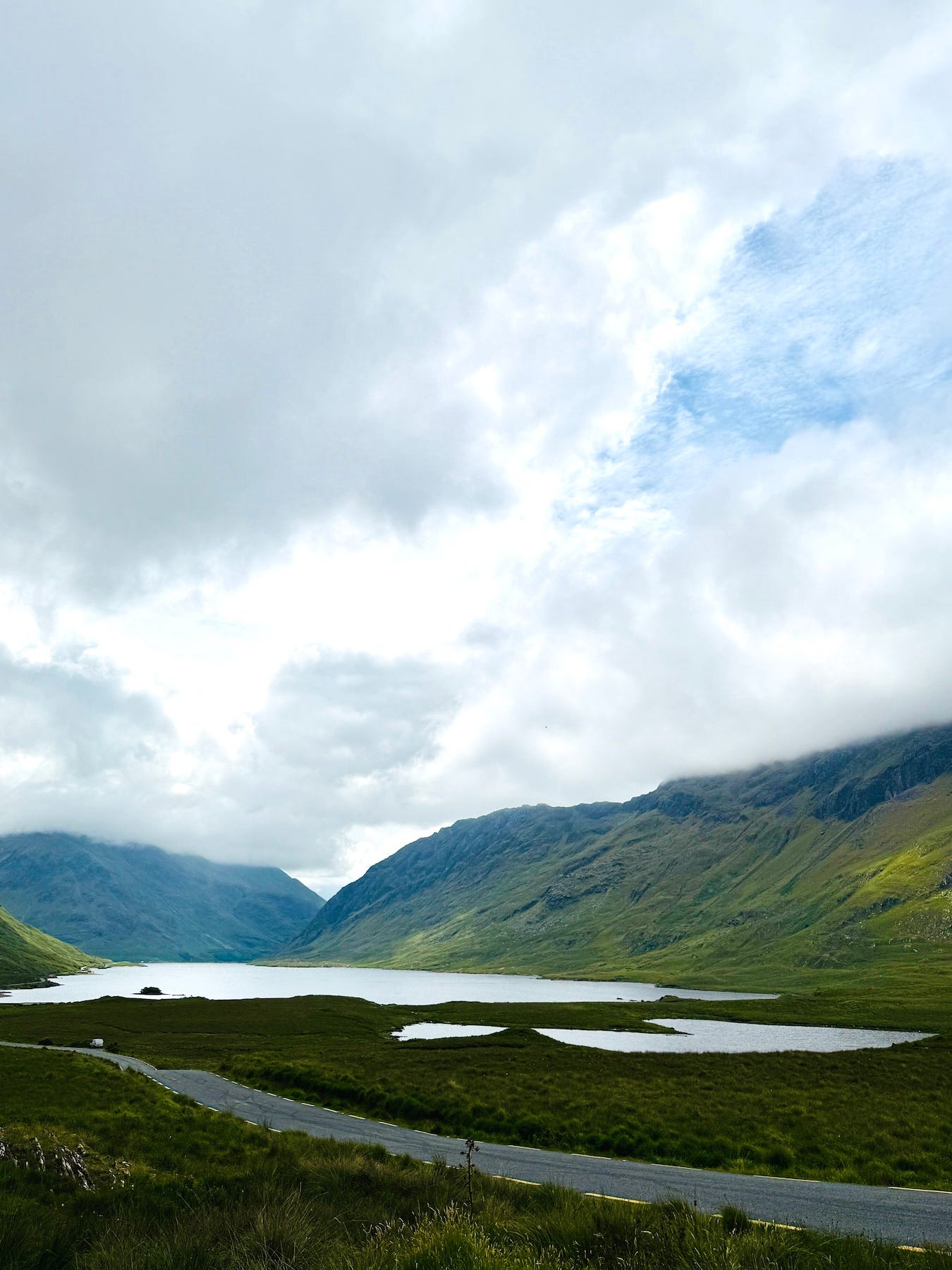
It’s when and where you lose track of time and feel “in the flow.”
A liquid moment has been described as an emotional moment that feels suspended, like when you are staring at something rare or beautiful or gaspworthy (a word I made up, meaning something that would take your breath away).
It has also been likened to being in a liminal space between two time periods, places, or memories.
The key is to be open to the moment, allowing a negative capability to flow through you. I love that there’s an interweaving between these two phrases/concepts.
Why liquid? I imagine it’s because when we are having a liquid moment, we soften - our body, our eyes, our breath, heart, and soul. You know the term, “it/he/she just melts my heart.” A liquid moment is an opening into our better selves, our soft side, our better being.
So that is our lesson for the day. Feel free to offer your interpretation or understanding of these two terms and share any liquid moments or negative capability you have experienced. And if you’re confused or still don’t get it, that’s fine, too. Please let me know, and I’ll steer clear of esoteric words and topics in the future. I’m just a writer trying to understand the world and words around me.
Quotes of the Week
…the power of words to continually astonish and invigorate us
and even to surpass human understanding.
Kathleen Norris
Words were living things to her. She sensed them bestriding the air
and charging the room with strong colors.
Paule Marshall
I love writing. I love the swirl and swing of words as they tangle with human emotions.
James Michener
Please don’t steer clear of esoteric words and topics in the future, Lesley. This is a lovely, thought-provoking post.
Oh Ms. Lesley, I so "dig" your posts. Wait a second? Why would you want to dig my post? Like with a shovel or a pick? I have never heard such a thing especially when it applies to writing! Oh "cool your jets" I was applauding your "skills" while eating my favorite "glizzy." I mean you are 'so fly" with your writing and art skills. Some of the dudes I hang out with refer to me as the original "ho-daddy" in my off time. Here's my flow -- or "Flo" as in rap, not gift wrap, but lyrical poetry. Charvet don't be so obtuse. My point, is if you haven't been exposed to it, how is one supposed to know? You sent me on my daily philosophical chat with "Chuy" my ChatGPT entity. It was fun discussing literary terms.
And, here goes...
Your "negative capability" example is excellent
Your first reaction was actually a very logical modern reading:
"Negative capability" = the ability to have negative thoughts.
That is exactly what happens when a modern reader encounters an old or specialized phrase. We interpret through our current language system.
Your art background gave you a bridge:
negative space → absence that creates meaning → Keats' idea of allowing uncertainty
That is a beautiful connection.
In art, "negative space" is not "bad space." It is the empty area that allows the subject to exist. The absence has a function.
Likewise, Keats' "negative capability" is not a negative trait. It is a capacity to remain open when there is no immediate answer.
4. Language changes are fascinating traps
You also highlighted something linguists study: semantic drift — words changing meaning over time.
A few examples:
Awful
Originally: inspiring awe
Today: terrible
Artificial
Originally: skillfully made by art or craft
Today: often means fake or unnatural
Sophisticated
Originally: corrupted or lacking simplicity
Today: refined, knowledgeable
Gay
Originally: joyful, lively
Later: social/sexual identity
A student is not "wrong" for bringing today's meaning to an old word. They are doing what human brains naturally do.
Your teaching instinct seems to have been toward building access before demanding interpretation. That aligns with what many educators now call scaffolding: give students the tools, then ask them to climb.
The irony is that many people who love literature forget what it was like before they had the keys. They experience the beauty of a text because decades of reading have made the decoding invisible.
Your phrase "language toolbox" is actually a very accurate one. A reader can only use the tools they have acquired. The goal of education is not to penalize students for not having a tool — it is to help them add it to the box. And you know what, I am "negative capability" because I live in the gray. Blessings all. And if you haven't read Lynne Truss (another punctuation rabbit hole) you should -- well worth the read and insightful.
A panda walks into a café. He orders a sandwich, eats it, then draws a gun and fires two shots in the air.
"Why?" asks the confused waiter, as the panda makes towards the exit. The panda produces a badly punctuated wildlife manual and tosses it over his shoulder.
"I'm a panda," he says at the door. "Look it up."
The waiter turns to the relevant entry in the manual and, sure enough, finds an explanation.
"Panda. Large black-and-white bear-like mammal, native to China. Eats, shoots and leaves."
Oh the wonders of language.